
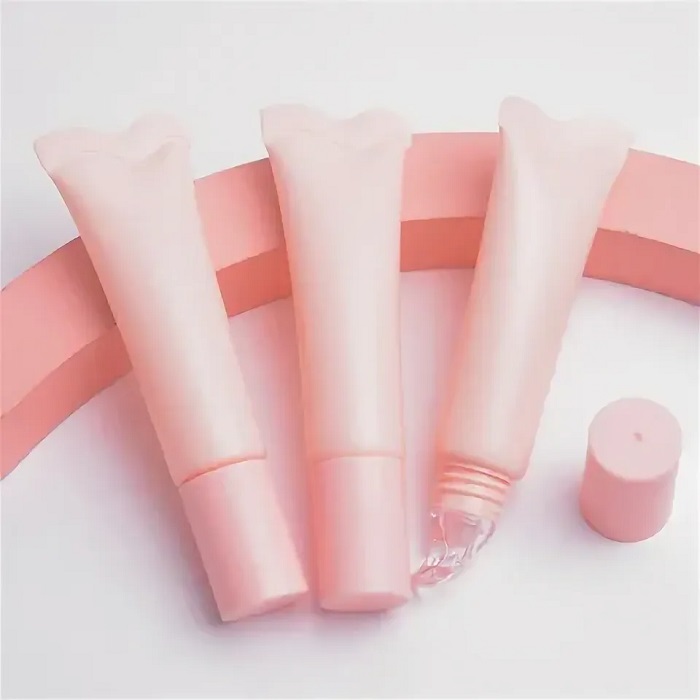
The dispensing tip is a small component, but it has a noticeable effect on how a lip gloss, lip balm, or lip treatment performs. It controls where the formula exits, how easily the user spreads it, and how clean the package remains after repeated use.
Angled and straight tips are two common designs used on flexible squeeze tubes. Both can work well, but they create different application experiences and suit different formula types.


The right choice depends on viscosity, target use, package size, desired application style, and the level of dispensing control required.
What Is an Angled Tip?
An angled tip has a slanted application surface rather than a flat opening perpendicular to the tube neck.
The opening may sit near the center or closer to the edge of the slanted surface. Some designs use a smooth, rounded profile, while others include a shaped applicator surface intended to follow the lips.
Angled tips are common in lip gloss, lip balm, lip oil, and treatment products because they allow the consumer to apply the formula directly from the package.
The tip can combine dispensing and spreading in one component, reducing the need for a separate applicator.
Advantages of Angled Tips
The main benefit is application comfort.
The slanted surface fits naturally against the lips and makes it easier to spread the formula along the lip line. The user can hold the tube at a comfortable angle without positioning the package directly in front of the mouth.
An angled tip may also create a more familiar cosmetic experience. Consumers often associate this format with portable glosses and moisturizing lip treatments.
The surface can distribute product over a wider area than a narrow straight nozzle. This makes it suitable for soft balms, medium-viscosity glosses, and formulas intended for quick application without a mirror.
Limitations of Angled Tips
Angled tips can collect formula residue around the opening, especially when the product is thick or sticky.
The broader surface may require wiping after use to prevent buildup. If the cap does not provide enough internal clearance, residue can transfer to the inside of the closure.
The orientation of the opening can also affect filling and sealing design. Manufacturers must ensure that the tip aligns properly with the cap and that the closure does not press against the dispensing surface.
A highly customized angled tip may require new tooling, which increases development cost and minimum order quantity.
What Is a Straight Tip?
A straight tip has a flat upper surface or a nozzle aligned directly with the tube body.
Some versions use a wide central opening for creams and balms. Others have a narrow precision nozzle designed for controlled dispensing.
Straight tips are common in pharmaceutical-style ointments, concentrated lip treatments, gels, and products where the consumer applies the formula with a finger or another tool.
They can also be used for direct lip application when the edge is rounded and comfortable.
Advantages of Straight Tips
Straight tips provide simple, controlled dispensing.
A narrow opening can release a small amount of product, which is useful for concentrated formulas or treatments intended for targeted areas. The consumer can place the formula on a fingertip before application.
The design is generally easy to mold and may offer better compatibility with standard screw caps. A flat tip can also be easier to inspect and clean during production.
Straight tips often support clinical, functional, or minimalist product positioning. They may be preferred when the packaging is intended to resemble a treatment tube rather than a conventional makeup product.
Limitations of Straight Tips
A straight tip may be less comfortable for direct application because the user needs to adjust the tube angle manually.
A narrow nozzle does not spread the formula, so the user may need to use a finger. This can be less convenient and may not suit brands emphasizing mess-free application.
A wide flat opening can release too much product when paired with a soft tube or low-viscosity formula.
The tube wall softness, opening size, and product flow must therefore be tested together.
Formula Viscosity and Orifice Size
The tip shape cannot be evaluated separately from the dispensing opening.
Thick balms and high-viscosity glosses may require a wider orifice. A narrow opening could demand excessive squeezing force and cause the formula to emerge suddenly.
Lightweight lip oils need smaller openings to prevent dripping or over-dispensing.
Angled tips often work well with medium-viscosity formulas that can spread across the lips. Straight precision nozzles suit concentrated gels, ointments, and products applied in small amounts.
Brands evaluatingASME lip gloss tubesshould request samples with different orifice sizes rather than choosing the tip shape from photographs alone.
Cap Design and Leakage Protection
The closure must seal the opening securely.
Screw caps are common for both angled and straight tips. Some caps include an internal plug that enters the opening and creates a tighter seal.
The cap must not press too strongly against an angled surface or leave enough space for formula to spread inside the closure.
Leakage testing should include upright, inverted, and horizontal storage. Packages may also be exposed to heat, vibration, and pressure changes during transportation.
Decoration and Brand Appearance
Angled tips create a more cosmetic and consumer-friendly appearance. They pair well with soft squeeze tubes, transparent materials, bright colors, and gloss-focused branding.
Straight tips support cleaner, more technical designs and may work better for medicated, dermatological, or treatment-led products.
The shoulder, cap, and tip should appear visually balanced. A large cap on a very narrow tube can feel disproportionate, while a small cap may be difficult to grip.
Testing the Final Package
Brands should fill samples with the actual formula and evaluate:
- Dispensing force
- Amount released
- Direct application comfort
- Formula buildup
- Cap cleanliness
- Leakage
- Tip durability
- Consumer handling
- Filling-line compatibility
Angled tips are often better for direct, comfortable application, while straight tips offer simple construction and precise dispensing. The strongest choice is the one that matches the formula and intended consumer behavior rather than the design that looks best in isolation.