
When apparel decorators model the return on investment (ROI) of a commercial direct-to-garment (DTG) printer, relying solely on the RIP software’s ink-droplet estimate per graphic understates real operating expense: true per-shirt unit cost is determined by active printhead hours per shift, white-ink maintenance purges, pre-treatment fluid gram weight, and manual loading/curing labour.
Building a transparent cost worksheet before purchasing hardware allows garment print shops to price small-to-medium cotton orders profitably without guessing at payback timelines.


Why RIP Ink Estimates Never Equal Total Operating Cost
Most commercial DTG RIP packages include an ink cost calculator that multiplies the millilitres of CMYK and white ink fired inside a graphic bounding box by the per-litre ink price. While that figure is useful for comparing two artwork layouts—such as a solid white rectangle versus a knocked-out vector illustration—it omits the baseline consumables required to keep a water-based pigment system healthy across a working week.
To calculate an accurate gross margin per printed shirt, shop accountants must include four recurring cost buckets alongside graphic ink volume:
- Pre-treatment solution and application loss: Dark cotton garments require a measured spray of liquid pre-treatment (plus occasional light-garment pre-treatment depending on ink chemistry and wash targets), including minor overspray inside the spray booth.
- White-ink circulation and head-cleaning purges: Because titanium-dioxide white pigment is denser than CMYK dyes, every shift begins with a nozzle check and periodic automatic or manual head wipes that consume a small, predictable baseline of white ink and cleaning solution.
- Hands-on operator cycle minutes: The minutes spent pre-pressing moisture out of the blank, spraying and drying pre-treatment, dressing the DTG platen, and feeding the conveyor dryer often exceed the raw ink cost on light-coverage designs.
- Curing energy and blank spoilage allowance: Electrical draw from heat presses or conveyor tunnel dryers, plus a realistic 1%–2% garment misprint buffer, belong in the shop-floor cost model.
Unit Cost Structure Across Three Typical Cotton DTG Order Profiles
Because fixed shift maintenance is spread across the total number of shirts printed that day, daily capacity utilisation has a dramatic effect on per-garment cost.
| Cost Component | White / Natural Cotton Tee (CMYK Only, No White Underbase) | Mid-Tone Heather / Pastel Cotton Tee (Light Underbase) | Black / Navy Heavyweight Cotton Tee or Hoodie (Full White Underbase) | Cost Optimization Lever |
|---|---|---|---|---|
| Graphic ink consumption | Lowest (CMYK pigment channels only) | Moderate (reduced white highlight/underbase + CMYK) | Highest (opaque white base + CMYK colour layer) | Use RIP garment-knockout tools on dark shirts so black fabric replaces black ink and white underbase |
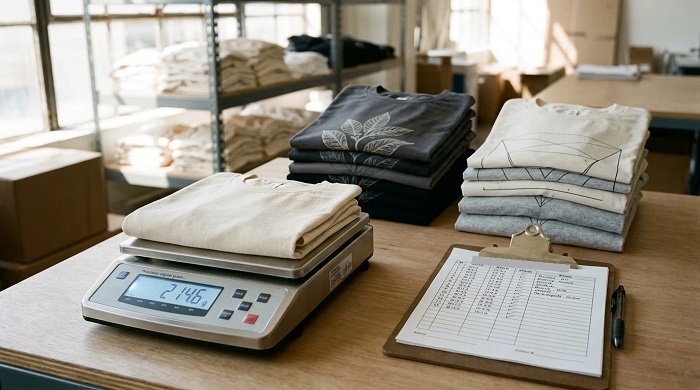
| Pre-treatment fluid & drying | Often zero or minimal (test specific blank finish & wash requirement first) | Required for white-ink bonding; light GSM spray setting | Mandatory full coverage matched to fabric GSM + dedicated pre-dry press | Weigh blanks on a digital gram scale before and after spraying to prevent costly over-application |
| Active print & curing cycle | Single fast colour pass + standard heat cure | Dual/single pass depending on head layout + full moisture cure | White + colour pass + verified airflow tunnel curing | Batch dark orders together to run continuous shifts without idle pauses |
| Maintenance purge allocation | Spread evenly across all garments printed per week | Spread evenly across all garments printed per week | Spread evenly across all garments printed per week | Consolidate DTG production into scheduled high-volume days rather than sporadic one-shirt startups |
Three Shop-Floor Controls That Protect Daily DTG Gross Margin
Print shops that achieve consistent profitability on commercial DTG lines do not cut corners on ink quality; instead, they eliminate hidden waste upstream and downstream of the printer.
First, calibrate pre-treatment spray weight with a digital gram scale at the start of every shift. An uncalibrated nozzle that sprays ten extra grams of pre-treatment per hoodie not only wastes fluid—it also extends heat-press drying time and increases the risk of scorching or stiffening the cotton face.
Second, batch orders by platen size and garment shade. Swapping platens between youth tees, adult hoodies, and sleeve attachments ten times a day fragments operator rhythm. Grouping all dark adult tees utilizing the same RIP profile into a single two-hour block maximises active jetting minutes per hour.
Third, log daily nozzle checks and capping-station maintenance. Spending ten minutes at shift end cleaning wiper blades, cap tops, and platen adhesive lint prevents mid-run head strikes that can ruin an expensive heavyweight hoodie blank.
Selecting Industrial DTG Printers Engineered for Predictable Operating Costs
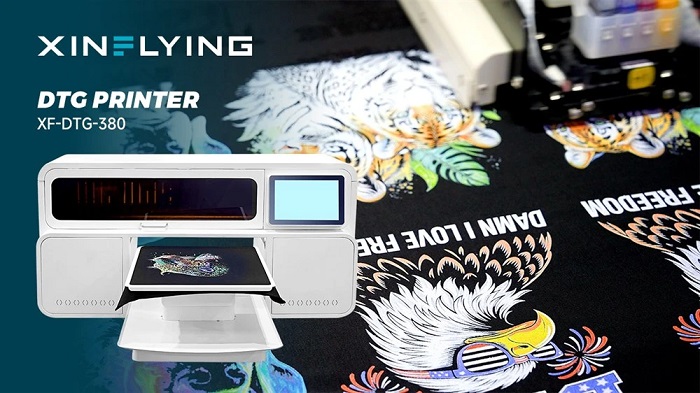
Hardware design plays a direct role in controlling long-term consumable overhead: closed-loop white-ink circulation systems and industrial printheads reduce the amount of white ink wasted during morning start-up purges. Print shop owners evaluating heavy-duty production platforms such as the XINFLYING XF-DTG-380—or comparing compact and dual-platen systems like the XF-DTG-10 and XF-DTG-20—can review the technical specifications across XINFLYING direct-to-garment printers to match daily capacity and white-ink management architecture to their business plan.
By pairing an industrial system like the XINFLYING XF-DTG-380 with gram-scale pre-treatment calibration and batched shift scheduling, garment decorators can replace guesswork ROI projections with disciplined, repeatable per-shirt margins.