
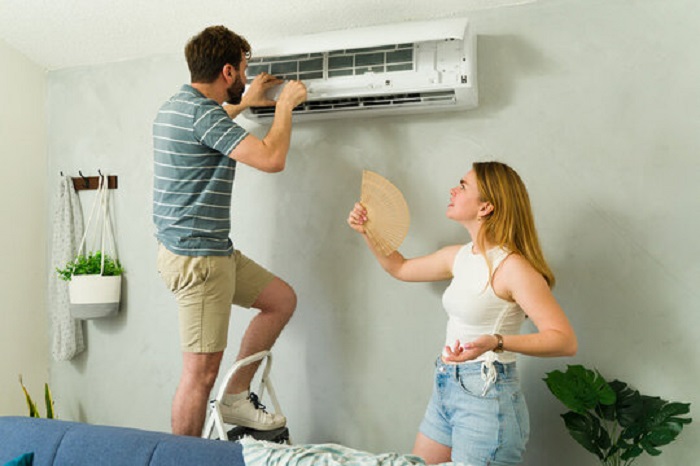
Installing a residential air conditioner yourself is possible, but it depends on the system type, manufacturer requirements, and your skills with electrical wiring, tools, and sealed connections. Most often, this applies to split systems, where not only the unit mounting and routing are important, but also the proper preparation of the refrigeration circuit with AC installation near me.
The main difficulty is that installation errors can lead to freon leaks, reduced efficiency, increased noise, and voiding the warranty. Therefore, before deciding to do it yourself, it’s important to assess the risks, compare the cost of the work, and understand which steps can be realistically completed without specialized equipment.


Steps that most often require professional assistance
Key operations involve the refrigeration circuit and electrical wiring. This is where precision and equipment are required, otherwise the air conditioner can quickly fail.
Working with copper wiring and sealing
- Proper flaring of pipes, maintaining clean edges, and proper nut tightening torque.
- Using a torque wrench (overtightening and undertightening are equally dangerous).
- Checking connections for leaks.
Evacuation and startup
A vacuum pump and manifold gauge are required to remove air and moisture from the system. Purging with freon instead of evacuating is a common mistake that increases pressure, impairs heat transfer, and increases the risk of corrosion and compressor failure.
Electrical Connection and Safety
- Selection of cable and circuit breaker cross-section according to the device datasheet.
- Establishing reliable grounding.
- Correct connection of the inter-unit cable and power supply without twisting or overheating the contacts.
Warranty, Liability, and Standards
Many manufacturers provide a warranty only if installed by certified specialists, with a note in the documentation. If the air conditioner is installed independently and a malfunction occurs, the service center may refuse a free repair.
A practical approach: perform the preparatory work (fasteners, opening, cable duct) yourself, and entrust the evacuation, leak testing, and initial start-up to a specialist. If you’re looking for a service in your area, searching for “ac installation near me” will help you find nearby specialists and compare prices.
When is DIY installation justified, and when is it better to call in professionals?
Installing a residential air conditioner yourself can be worthwhile if you have experience with power tools and fasteners, clear and accessible locations for installing the units, and the ability to carefully complete all steps without taking shortcuts (especially vacuuming and leak testing). In this scenario, you save on installation costs and have complete control over the process.
However, an air conditioner is more than just brackets and a hole in the wall: the quality of installation directly impacts the compressor’s lifespan, noise level, energy consumption, and the absence of leaks. If there are any doubts about the tools, access, or the manufacturer’s requirements for commissioning, it is wiser to involve professionals to avoid voiding the warranty and expensive repairs during the first season.
Summary: Selection Criteria
- Do-it-yourself installation is justified if:
- the line is short and simple, without complex bends or hidden wiring;
- the outdoor unit can be safely secured without working at height (e.g., on a balcony/loggia);
- all the necessary tools are available, including a vacuum pump, pressure gauge manifold, pipe cutter, and flaring tool;
- are ready to perform pressure testing/leak testing and mandatory vacuuming before commissioning.
- It is better to call professionals if:
- the outdoor unit needs to be installed on a façade above the first floor, above A passageway/sidewalk or a hard-to-reach location;
- Chasing, concealed installation, non-standard line length, or complex route are required;
- There is a risk of damaging the reinforcement/wiring in the walls, or the wall is problematic (non-reinforced aerated concrete, insulated façade, etc.);
- No equipment for vacuuming and pressure monitoring;
- It is important to maintain the manufacturer’s warranty and obtain an installation/commissioning certificate;
- The apartment/house has strict management company requirements or regulations regarding unit placement and condensate drainage.