
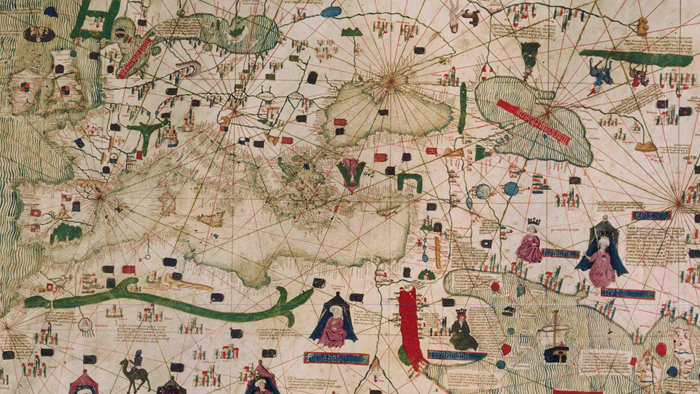
Mapping is a process that requires precision, attention to detail, and adherence to a number of professional rules. A map must not only depict territory or data but also be easy to read, logical, and informative.
This is why cartography relies on strict requirements that help create high-quality and understandable materials.


Basic Requirements for Mapping
The first and most important requirement is data accuracy. Any map countries must be based on verified information, whether it be geographic coordinates, administrative boundaries, countries, or thematic data. Errors at this stage can lead to distorted information and incorrect conclusions.
The second important aspect is maintaining scale. Scale determines the relationship between real distances and their representation on the map. It must be appropriate to the map’s purpose: a small scale is used for a general overview, while a large scale is used for detailed analysis.
Equally important is maintaining legibility. All map elements:
- Labels;
- Symbols;
- Lines;
- Boundaries.
Overloading with detail reduces the effectiveness of map perception and complicates its use.
The presence of legend is also a mandatory requirement. The legend must explain all symbols and colors used to enable the user to correctly interpret the information.
Visual and Technical Requirements
When creating a map, it is important to consider visual harmony. The color palette should be balanced, with sufficient contrast to distinguish objects, but not too bright to avoid overwhelming the user.
Fonts should be clear and legible. Text size is selected based on the map scale and the intended use—print or digital.
Technical accuracy also plays a key role. Nowadays, many maps are created using digital tools and geographic information systems, which requires accurate data processing and adherence to standards.
Mapping requires a combination of precision, logic, and visual thinking. Adherence to these basic requirements—accuracy, legibility, correct scale, and proper design—allows for the creation of high-quality and useful cartographic materials. And using practical tips helps make the map more understandable, convenient, and professional.