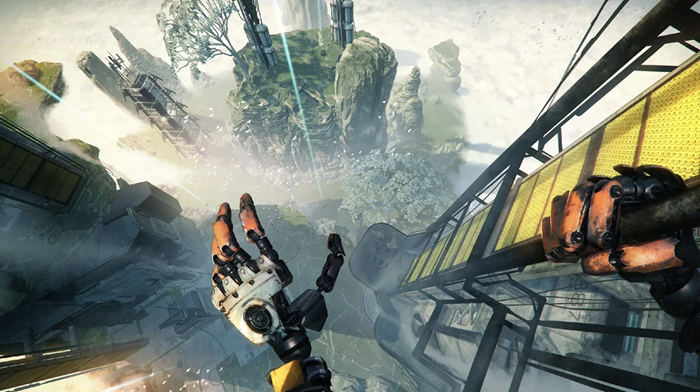
VR games are interactive projects in which the player is immersed in a virtual environment using a headset, controllers, and motion tracking systems.
This format changes the traditional model of interaction: the user doesn’t simply observe, but rather acts with their body, turning their head, approaching objects, and feeling like a participant in the events.


Creating a VR game https://battlestart.com/ is the process of designing the world, mechanics, and interfaces, taking into account human physiology, device limitations, and the peculiarities of perception in 3D space. Comfort, precise control, and convincing presence are essential, and the final result depends on the balance between performance and graphics quality.
Advantages of VR Games for Players and Developers
The main advantage of VR is a new level of engagement. The player experiences vivid emotions from the scale, proximity of objects, and natural actions. For developers, VR opens up interactions that are difficult to achieve on a flat screen: for example, precise hand manipulation, physical puzzles, and “body” traversal.
Benefits for Players
- Deep Immersion: The surrounding world is perceived as three-dimensional, and distances and sizes become part of the gameplay.
- Intuitive Controls: Many actions are self-explanatory—grab an object, rotate it, zoom in, aim.
- Emotional Richness: Fear, delight, and surprise are enhanced by presence and spatial sound.
- Activity: VR often involves movement, making the gaming experience more physical.
Benefits for Developers and Studios
- New Genre Formulas: Simulators, Horror, Puzzles, Rhythm Games, and Immersive Adventures are revealed especially vividly.
- Strong “first-experience effect”: a successful VR prototype can quickly demonstrate the value of an idea.
- Flexibility of interactions: mechanics can be built around physics, gestures, gaze, and spatial UI.
- Product uniqueness: high-quality VR gameplay is harder to clone because it is tied to sensations and comfort.
What is important to consider when creating VR games
For VR to truly realize its potential, development requires discipline: stable performance, predictable interactions, and a careful attention to comfort. A good VR game explains controls without overload, reduces the risk of motion sickness, and gives the player a sense of control over their body and space.
Conclusion: What makes a project a VR game
Compared to 3D projects, VR requires a different design logic: from controls and interface to pacing, distances, and information delivery methods. Compared to AR, VR does not overlay content on the real world, but completely replaces the environment and assumes responsibility for comfort, safety, and perceptual fidelity.
Final features by which VR can be distinguished from 3D and AR
- Immersion and presence: the user is “inside” the scene, not in front of the screen.
- 6DoF tracking: the position and rotation of the head (and often the hands/body) directly determine the point of view and actions.
- Natural interaction: interaction is based on gestures, grip, aiming, and movement, and not just clicks and cursors.
- Scale and spatial fidelity: distances, height, speed, and objects are perceived physically and require precise calibration.
- Complete environment replacement (unlike AR): the virtual world is the primary context, and the real world is excluded from Perception.
- Comfort as part of the design: limitations on camera movement, acceleration, UI readability, and session length are basic requirements.
- If a project can be completed without a headset or tracking while maintaining key mechanics, it is most likely a 3D game with a VR mode, and not VR per se.
- If a project depends on a real environment, a camera, and anchors in space, and virtual objects “live” on top of reality, it is AR, not VR.
- If the primary value is created through presence, bodily interaction, and the spatial behavior of the world, it is a VR game as a standalone format.